"We not only tend to compare things with one another but also tend to focus on comparing--and avoid comparing things that cannot be compared easily."
Monday, February 14, 2011
Quote of the day: Relativity
From Dan Ariely "Predictably Irrational: The Hidden Force that Shape Our Decisions"

Tuesday, February 08, 2011
déjà vu tentang kebiadaban
Kejadian pembunuhan terhadap warga Ahmadiyah yang saja terjadi, membuat saya ingin membaca sebuah 'kicauan' (tweet) di akun Twitter saya per tanggal 31 Agustus 2010 lalu. Isinya sebagai berikut:
Ide "pembubaran" satu ajaran/agama, slalu mgingatkan saya dgn "pelarangan PKI" yg berujung pd diskriminasi hingga genocide. Resiko yg mahal!
Ketika saya berkicau seperti itu, saya hanya ingin merespon pernyataan Menteri Agama yang percaya bahwa "pembubaran" Ahmadiyah hanya akan memberikan resiko yang kecil. Menurut pendapat saya, tidak akan ada resiko yang kecil atas suatu tindakan pelarangan terhadap organisasi apalagi sebuah ajaran 'agama'.
Seharusnya masih segar diingatan kita bagaimana dampak yang timbul ketika Partai Komunis Indonesia (PKI) dinyatakan terlarang di bumi Indonesia. Baiklah, mungkin PKI tidak bisa disamakan dengan Ahmadiyah atau ajaran 'agama'. Tapi, jika saya ingin menyamakan semangat pelarangan PKI dengan pembubaran Ahmadiyah, maka salah satu alasan pelarangan PKI adalah karena menyebarkan ajaran atau paham komunisme. Tidak ada perbedaan mendasar dengan pembubaran Ahmadiyah yang diyakini menyebarkan ajaran sesat. Itulah sebabnya, kita tetap bisa menggunakan pelarangan PKI sebagai referensi sejarah atas resiko pembubaran Ahmadiyah.
Kembali ke 'kicauan' saya di atas, seketika saya mengalami déjà vu ketika menyaksikan tayangan di YouTube berikut ini yang seolah membuktikan betapa tidak kecilnya resiko jika ingin membubarkan atau melarang sebuah organisasi atau ajaran 'agama'. Setelah menyaksikan tayangan tersebut, kita seolah diberikan sebuah episode kecil dari kutipan sejarah kelam yang pernah terjadi ketika PKI dibubarkan dan dinyatakan "terlarang". Perihal Ahmadiyah, memang belum dilakukan pelarangan pun pembubaran secara nasional namun SKB 3 Menteri yang diterbitkan pemerintah seolah memberikan pengesahan untuk melakukan pembubaran dan pelarangan oleh masyarakat. Padahal, tanpa SKB 3 Menteri pun mereka sudah mengalami pengusiran, dirusak tempat tinggal dan tempat ibadahnya, serta didiskriminasi; yang belum terjadi hanya genosida saja. Tapi tayangan tersebut memberikan semacam 'pemanasan' untuk semangat genosida tersebut.
Saat ini saya merasa menyesal telah membuat 'kicauan' tersebut karena ternyata itu sudah dimulai saat ini. Saya tidak ingin menggugat soal keyakinan siapapun, namun saya percaya seharusnya ada solusi yang lebih bijak, damai dan tidak perlu mengulang sejarah kelam. Tidak perlu ada pembunuhan atau pembantaian. Tapi, sekarang keduanya sudah dimulai. Bilakah para pemimpin negara, agama dan masyarakat bisa mencegah ini untuk terjadi lagi?
Mudah-mudahan kita bisa belajar dari sejarah, meskipun sedikit...
Monday, May 31, 2010
What’s in a name?
In many societies, a child’s name commonly represents their parents’ wishes and pray. A name also could lead us to a thoughtful meaning or could indicate an event or location when the child was born. This post will try to answer what’s in the name of my first son. His name is “I Dewa Gede Arvind Adiyatama.” My wife and I call him: Arvind. Let’s go through into each name and meaning.
Copyright © Dewa Wisana. All rights reserved
The first three names is a typical Balinese name. In Bali, “I” is a commoner title for male while “Dewa” is a title for Ksatriya, second wangsa or caste title among four wangsa which is common in Balinese society. Finally, “Gede” (means Big or the Eldest in Indonesian) is simply mean first-born. So, I believe the overall meaning of the first three names is quite obvious. These name are simply the recognition of Arvind’s association with and position in Balinese culture.
The next two names is a representation of wishes and pray upon him given any conditions when he was born.
Arvind means lotus in Sanskrit. Some believe that ‘Arvind’ means red lotus in particular, on which the Hindu goddess of wealth and prosperity – Lakshmi sits. According to myth, only the cleverest and most bright child gets the name 'Arvind'. Arvind is also believed to be the name for a minor god, ‘Aravinda’ – the god of wit, intelligence and shrewd scholarship. In conformity with those meaning, Arvind symbolize our precious wealth, eternal prosperity and representing blessing from God upon our family. Arvind also have a particular signification of scholarship or knowledge which both his parents strive for when he was born.
Adiyatama is two combine word “Adiya” and “Tama”. The name Adiya stems from the Indian word which means, “Gods Gift.” Adiya also a fluke combination of Arvind’s Grandpa and Grandma from Mom’s side: Hadi + Setya(ningsih). The name Tama is originally quoted from word Utama which is mean “Prime.” Ergo, Adiyatama signify as “the prime of gods gift.”
Finally, one may start to be curious what is the overall meaning of Arvind’s full-name. Me and wifey do not intend to put many thoughtful meaning on Arvind’s name. The one with possible brief meaning of Arvind’s full-name is: “First-born male Ksatriya which is the prime of gods gift that strive for knowledge.” For us, he is a precious gift from God. Our simple hope - a humble pray - upon him is that he will be a good individual who learn universal knowledge of life and share it to others.
Copyright © Dewa Wisana. All rights reserved
Thursday, May 20, 2010

Wednesday, January 27, 2010
policy wonks
We live in an age of "policy wonks" who judge programs [policies] by their effects on productivity, output, or work effort. Wonkian analysis uses the jargon of economics while ignoring its content.I can't hardly disagree with the above quote...
Saturday, January 16, 2010
Update 2010 Reading List: The Armchair Economist
Just want to update the 2010 Reading List after the last book arrived in my mailbox:
The Armchair Economist: Economics and Everyday Life by Steven E. Landsburg (author of More Sex is Safer Sex and The Big Question)
So, this is the final book in my 2009 wish list and in early 2010 all of them already complete.
Wednesday, January 13, 2010
Indonesia: Facebook leader?

Jeremy Wagstaff's post, Facebook in Asia: A Limit to Growth? shows an achievement (yeah, not so important probably) for Indonesia. He collected information on Facebook populations by country in Asia-Pacific. And, Indonesia is taking lead as the highest Facebook populations. With 24% growth and 6.68% proportion of population on Facebook, Indonesia shows stunning expansion of penetration.
Without valid data on number of internet access in Indonesia, I guess Facebook population that a top-notch in Indonesia mainly drifted strongly by the wide access on mobile phone through 3G network. Despite of lack of high speed internet network available in Indonesia, this is something that can be seen as good thing that Indonesian population highly appreciate internet as their new media for communication or expanding social network. It shown a combination of expanding information technology with people ability to utilize such technology.
We may continue to highlight some detrimental thing of high Facebook user. However, I believe it is more sensible if we are being affirmative with how can Indonesian people gain benefit from better access to information after they are able to expanding their social network and technology utilization. Such access hopefully could give some additional knowledge, skills or social movement for greater welfare achievement.
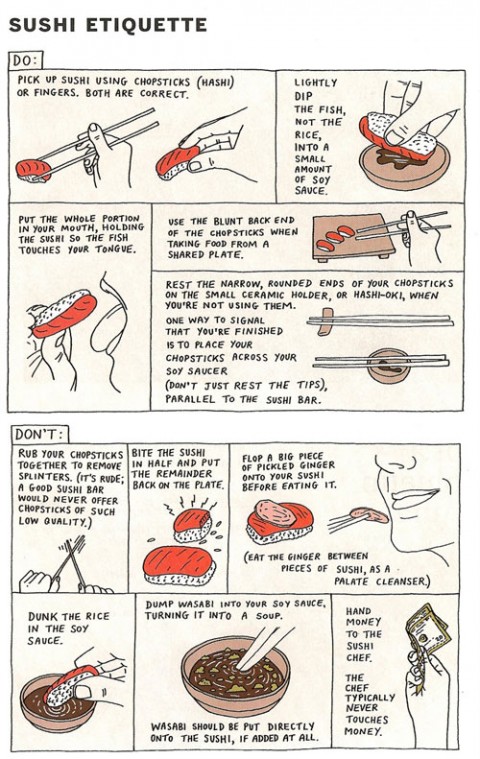
On sushi etiquette
I am not a big fan of sushi, but I do love sushi. Wifey really crazy with sushi and due to her pregnancy now, she really miss them a lot. Therefore, I would love to share her and all of you guys this following guideline on how to eat sushi in a perfect manner. Definitely, it is really beneficial if you stayed or visit Japan. Yet, I believe it is also good no matter where you eat sushi.
Happy sushi!

Happy sushi!
Tuesday, January 12, 2010
wifey just won her first eBay item!
She just won a New 'Easy Wrap Swaddler' from her first bid attempt on eBay.
I noticed that she made only a single bid and won, remarkable. Without denying a possibility of luck, I believe she carefully listen and learned whatever strategy I kept discussing with her during my own bid on eBay. And somehow, she work on it even better than me. In other words, I should be aware of her since she is a good 'player' in auction game...
Congratulation, honey!
I noticed that she made only a single bid and won, remarkable. Without denying a possibility of luck, I believe she carefully listen and learned whatever strategy I kept discussing with her during my own bid on eBay. And somehow, she work on it even better than me. In other words, I should be aware of her since she is a good 'player' in auction game...
Congratulation, honey!
the Oil Age is not over yet

The above picture quoted from the following article. I recall in one of my class I asked how many people believe that oil stock will be depleted and how fast. Due to global warming and environmental issue (only some given answer through staggering oil price), a lot of class member somehow believe that oil stock will be depleted very soon. In other words, many people believe that oil will be gone very soon. My answer was the stock of oil will be not depleted very soon, in fact there are more of them for sure but it requires new technology and/or new approach to reach their sources beneath the earth.
The article above indicates such possibilities. I am not sure how delicate your opinion will be influence by such ideas, regarding efficient energy consumption vis-a-vis global warming and/or environmental issue. But, I believe we need to firm our effort to reduce our indulgent for oil and looking for other alternatives.
On "Google" and "Tweet"
According to this report, "Google" is selected as word of the decade. And, "Tweet" is selected as word of the year.
I am just wondering now, what would be the possible translation of Google and Tweet into Indonesian language?
*Please note, I am looking for non absorption language to be able to make them really Indonesian language without any excuses.
I am just wondering now, what would be the possible translation of Google and Tweet into Indonesian language?
*Please note, I am looking for non absorption language to be able to make them really Indonesian language without any excuses.
Sunday, January 03, 2010
2010 Reading List
After a couple of months hunting for reliable (I mean cheap!) online book sellers, finally before year 2009 ended I was able to order some wish-list books and they arrived by the last week of 2009. Following are list my latest collection:
- The Return of the Economic Naturalist: How Economics Helps Make Sense of Your World by Rober H. Frank (Author of The Economic Naturalist)
- The Big Questions: Tackling the Problems of Philosophy with Ideas from Mathematics, Economics, and Physics by Steven E. Landsburg (Author of The Armchair Economist and More Sex Is Safer Sex)
- Create Your Own Economy: The Path to Prosperity In A Disordered World by Tyler Cowen (Authoer of Discover Your Inner Economist)
- Superfreakonomics: Global Cooling, Patriotic And Why Suicide Bombers Should Buy Life Insurance by Steven D. Levitt and Stephen J. Dubner (Author of Freakonomics)
- Dear Undercover Economist: Priceless Advice on Money, Work, Sex, Kids and Life's Other Challenges by Tim Harford (Author of The Undercover Economist and The Logic of Life)
- Economic Gangsters: Corruption, Violence, and the Poverty of Nations by Raymond Fisman and Edward Mogul
- Parentonomics: An Economist Dad's Parenting Experiences by Joshua Gans
The last two books - Economics Gangsters and Parentonomics - are the first books I bought and already finished to read them.
I recommend Economic Gangsters for any of you who interested with corruptions and violence from economics perspectives. It is well written and worth to read during your spare times. My favorite chapter is the first one which discuss about Suharto Inc. While for Parentonomics, I feel a bit uneasy while reading it. Not necessary because it discuss a lot about parenting, but the writing style not so specific. It is quite understandable because it close to economist parenting diary rather than economist parenting theory/concepts compilation. However, it is still worth to read if you are interested with parenting and economics.
For the first five books, I am just in the middle of exciting reading the two hot books: Superfreakonomics and Dear Undercover Economist. Both of them really superb books, highly recommend! I hope I can blog them - and the rest of the book - very soon. Especially the Dear Undercover Economist, wifey really enjoyed reading it as well.
In case you have your own opinion or review regarding one or any of my reading list, please kindly share your thought.
Wednesday, November 25, 2009
Lesson from parking fine

The picture above is a simple prove for the cost of testing whether a system works or not. Yes, it is a parking fine ticket. I was violating the law by parking on the spot that was not suitable with my parking permission that I have.
The motivation at the moment I did the violation was there should be a window of opportunity to buy some time before the parking check take place. The plan was just park the car for one or two hours then move to find another place to park. Unfortunately, I totally forgot about the strategy I've been set up and I expect that there will be no inspection by parking check officer that day (wrong expectation, I know). So, the inspection happened for sure. Then, I paid the fine.
Personally, this is an expensive way of learning that the system works in this country. Unlike in many developing country (such as my country), where you still have possibility to "bargain" with the system; the law system in most of developed country is quite strict and working well enough. I am not saying that the system working perfectly, but the degree might be significantly high. I other words, it is a reliable system if you wish for good public order.
I am just imagine how could this strict system could be apply in Indonesia? What are the ingredients to have such 'ideal' enforcement to work? Hopefully, this is not only a dream.
Thursday, October 08, 2009
pengadilan atau cerita-cerita seru?
Peringatan: Jika Anda termasuk orang yang tidak tahan cerita-cerita sensual dilarang membaca posting ini termasuk materi-materi yang dikutip di dalamnya.
Judul posting ini dipicu oleh berita tentang kasus Antasari dari salah satu koran ternama di Indonesia. Sehubungan itu, hanya ada satu orang yang ingin aku kecam yaitu Jaksa Penuntut Umum (JPU). Selain itu, ada satu institusi yang juga ingin aku kecam yaitu Pengadilan. Mengapa keduanya patut dikecam?
Aku hanya punya satu hal yang membuatku merasa patut mengecam mereka, yaitu mengapa isi dakwaan yang dibuat HARUS seperti kisah yang ditulis dalam buku stensilan. Berita di koran seperti ditaut di atas menunjukkan betapa pengadilan yang diwakili oleh JPU tidak mampu langsung ke titik persoalan dan dakwaannya sedemikian sehingga keadilan seakan-akan jadi pertunjukkan dagelan (jika belum bisa dikatakan menjurus ke pornografi tulisan dan lisan). Untuk memahami maksudku ini, Anda harus membaca berita tersebut dan mencoba membayangkan: apakah pengadilan adalah tempat untuk membeberkan aib atau menegakkan keadilan?
Jika gambaran pengadilan seperti di berita tersebut, aku rasa pengadilan yang diwakili oleh JPU tidak lebih dari pornografi berkedok pembeberan aib. Atau, JPU sedang membacakan cerita-cerita seru saja...
sungguh-sungguh tidak belajar...
Yang aku ingat, posting beberapa waktu lalu masih berkaitan dengan gempa yang terjadi di Tasikmalaya. Jika Anda membaca artikel yang dirujuk di situ, artikel yang ditulis oleh Putu Setia, sudah dengan gamblang sekali dinyatakan bahwa mencegah dampak yang lebih buruk jauh lebih dibutuhkan daripada sekedar legitimasi bencana dari ayat-ayat suci (di kolom komentar artikel tersebut, masih saja terdapat para komentator yang tak pernah bosan mencungkil ayat-ayat suci). Mencegah dampak yang lebih buruk bisa dilakukan dengan mengkaji kembali bagaimana membangun tempat tinggal yang "ramah" bencana.
Kemudian, datang lagi bencana gempa yang terjadi kali ini di Padang, Sumatera Barat. Sudah jelas, kita semua berduka. Namun, masih saja manusia-manusia "penguasa ayat-ayat suci" tersebut sibuk mencari-cari legitimasi bencana dari ayat-ayat suci yang mereka geluti. Mereka benar-benar bebal dan tak berperikemanusiaan. Entah bagaimana mengajarkan orang-orang yang penuh dengan kebebalan demikian.
Padahal, apa yang ditulis oleh Putu Setia masih tetap relevan dan menjadi keharusan untuk dikaji lebih jauh. Khususnya, terkait dengan bagaimana kita di Indonesia membangun tempat tinggal dan bangunan yang ramah bencana tadi. Bukan rahasia lagi bahwa prosedur dan perencanaan pembangunan hunian dan gedung-gedung di Indonesia penuh dengan praktek manipulasi yang mengabaikan baku mutu dan kelaikan bangunan yang semestinya ada. Hal tersebut sekarang terbukti di Padang. Dan dengan kesadaran tersebut, fokus kita seharusnya tidak hanya gempa, namun juga bencana alam lain yang menjadi rutinitas di Indonesia seperti: banjir, gunung berapi, kekeringan, dan sebagainya; juga tidak hanya terkait dengan tempat tinggal dan prosedur membangun namun juga tata cara kita memanfaatkan sumber daya dan lingkungan kita. Kita harus mulai memikirkan bagaimana strategi hidup di tengah-tengah lingkaran bencana. Bukan hanya berdoa, tapi juga berusaha dan berbuat...
Wednesday, September 16, 2009
Quote of the day: Indonesia adalah...
Dari Catatan Pinggir Goenawan Mohamad,
Kata-kata Suwardi dan Dekker terbukti jadi kenyataan 100 tahun kemudian, pada hari ini. Indonesia bukan sekadar multi kultural, tapi juga inter kultural: tiap orang jadi Indonesia karena memasukkan kebudayaan yang lain ke dalam dirinya. Sebab Indonesia bukanlah ke bhineka an yang bersekat sekat seperti dalam rezim apartheid. Indonesia adalah sebuah proses yang eklektik, bercampur, berbaur dengan bebas.
Sungguh ini merupakan kesadaran yang harus terus ditumbuhkan dan dikembangkan. Menjadi bangsa yang tangguh sekaligus besar, bukan hanya dilakukan secara fisik namun juga secara pemikiran dengan terus menyadari arti proses yang dialaminya. Hidup Indonesia!
Monday, September 07, 2009
mencegah vs merujuk
Dari kolom Cari Angin oleh Putu Setia yang berjudul Misteri Gempa,
Kita sudah diingatkan berdiam di daerah rawan gempa, tapi kita menganggap remeh hal itu dengan mengabaikan persyaratan hidup di daerah rawan gempa. Kita selalu berpikir bahwa bencana adalah nasib sial, takdir buruk yang tak bisa dicegah. Bahkan sebagian dari kita sering menganggap bencana sebagai cobaan dari Tuhan, atau malah kutukan dari Tuhan. Ah, bukankah Tuhan mahapengasih, kenapa harus main kutuk segala?
Meskipun dengan kata-kata yang relatif lugas seperti ini, masih saja ada yang menulis di kolom komentar dengan menghantarkan kata-kata Tuhan. Apakah sedemikian sulitnya untuk paham bahwa "mencegah" dengan perbuatan nyata jauh lebih baik dibandingkan sekedar 'merujuk' pada kata-kata suci?
Tuesday, August 25, 2009
Update clarification
As I posted before, I made clarification on Pendet dance from Malaysian claim. According to recent news, it was a mistake made by the television broadcast. It seems quite an easy confirmation since Pendet dance indeed belongs to Balinese and Indonesia. In this matter, I can accept that Malaysia free from any misconduct.
Unfortunately, this clarification not instantly diminished the label attached to Malaysia regarding stolen culture demeanor on Indonesia. For instance Rasa Sayange song, the clarification still apply...
Clarification not only for Malaysian, but for people all over the world
Given recent news which initiated by blatant Malaysian government over claiming another traditional Indonesian dance, in particular Balinese dance; I want to confirm not only Malaysian but also people all over the world as following:
Pendet dance is originally Balinese and Indonesian own dance. Malaysia never ever create or even own such a beautiful dance. Only Balinese and Indonesian who have capabilities to invent such creative dance and it is already being part of their life from their beloved ancestor.
Malaysia ought never ever try to claim and justify any dance that originally own and created by Indonesian. Malaysia must immediately quote the authenticity of any cultural activities that originally from any part of Indonesia. Malaysia must avoid any "stolen culture" demeanor, particularly from Indonesia of being used and claimed as Malaysian. Therefore, Malaysia can prove their dignity and sovereignty as a nation.
I urge Malaysian government and people of Malaysia to consider this clarification for the sake of etiquette.
Tuesday, August 11, 2009
Article of the day
From The Jakarta Post: Bali is reaching a crossroad
Bali is reaching a crossroads
Anak Agung Gde Agung , Jakarta | Sun, 08/09/2009 11:35 AM | Opinion
The rejection by the Bali administration to relocate 10 Komodo dragons from their natural habitat in Wae Wulu, West Manggarai, to the island province is a highly praiseworthy decision made for all the right reasons.
For one, forcing the komodo dragons to exist in a possibly harmful alien environment is worthy of mention. Secondly, Bali has shown it will not pursue its own goals as a cultural tourist destination at the expense of something more significant.
The second reason is a very important development in the mind set of Balinese officials, who have up until now only sought the maximum number of tourists by any means possible. The result has been catastrophic for the conservation of Bali's rich culture and environment.
The erosion of Bali's, tradition, culture and natural environment as a result of massive efforts to boost tourist numbers has occurred in a number of ways. The most visible is the overload in infrastructure and overuse of precious natural resources. Roads have become cramped with cars at all hours of night and day, while farmlands have disappeared at a rate of around 1000 hectares per year to make way for hotels, villas and malls.
All of Bali's 37 beaches and eight rivers have undergone serious transformations from their original states through development activities that have illegally violated building codes. Water levels at various points are so low they risk drying up altogether, inviting sea water to seep in. This problem and many more like it were foregone conclusions when the number of hotel rooms, set by French tourist company Sceto at a maximum 22.000 for Bali, exceeded the 70.000 mark. This excludes villas, home stays and condominiums which have mushroomed in quantum leaps these past few years.
The more fatal effect of this overload of tourists lies in the impact it has culturally. As farmlands are converted into tourist infrastructure, alienation not only occurs with the land but also to the temples, rituals, ceremonies and communal life - the essential lifestyle of the people who used to live on that land. The Balinese way of life, culture and tradition has been displaced in the blink of an eye.
Worse still, the hotels that have come to replace the indigenous farmers bring in their wake western values of individualism, meritocracy, efficiency and other modernist traits. These exist in stark contrast to the previous Balinese symbol-oriented society. Needless to say, rapid transformations occur wherever the Balinese language is abandoned for English as a sign of advancement.
Considering this tragic trend, the recent announcement by the Balinese administration that the focus of its tourist industry is cultural is therefore something of a landmark. If seriously adhered to, this could signal the reversal of some of these damaging trends Bali has been enduring.
Now that the intent is there, the administration needs to identify the means by which is plans to achieve its objectives, that is conserving the island*s cultural and natural heritage.
The important point here, as far as tourist management is concerned, is to heed to the basic idea that tourists travel to a place to experience its unique cultural and natural environment. With this in mind, the administration should focus on three strategies.
First, it should aim to preserve and enhance the special cultures, traditions and natural environment of Bali through multifaceted defensive and motivational policies.
Next, it should bring in the right type of tourists who can appreciate the culture and natural environment of the island. It should stop emphasizing the sheer number of tourists arriving and begin advocating for the right kind of people it wishes to host. This will prevent Bali from becoming everything for everybody and eventually nothing for nobody. In short, it will protect it from losing its uniqueness. Those visiting Bali for its unique culture will reinvigorate local pride in culture.
Finally, Bali's key philosophy on life, the Tri Hita Karana, should be strengthened. The premise of the philosophy teaches that man in his every action should always heed his impact on the three main surroundings - his fellow being, his natural environment and his god or morality. In meeting his needs, man should balance them in such a way that the needs of those around him are not impaired.
He should adhere to the way of the Tri Hita Karana, or the "Sacred Balance", which governs behavior to conform to propriety, reciprocity and interconnection, all of which mean honoring heritage and conservation. If Balinese can truly live the way of the Tri Hita Karana, they will refrain from achieving their objectives at the expense of their tradition, culture and environment.
While the clock is ticking fast and Bali is rapidly approaching this crossroads, it is not too late to turn fate around. May the rejection of the Komodo dragons wake the Balinese to the dire danger that their rich heritage faces and galvanize them toward the right course of action.
Dr. Anak Agung Gde Agung is a graduate of Harvard (US) and Leiden (Holland) universities and the Fletcher School of Law and Diplomacy (US). He was a member of the Supreme Consultative Body (MPR - RI, 1999 - 2004) and was a Minister of Societal Affairs under President Abdurrahman Wahid.
Sunday, August 09, 2009
SuperFreakonomics for the suicide bombers

Courtesy of Freakonomics
I would like to buy this book for two main reason: 1) I want to know what will be the new topics discuss by Levitt and Dubner in this book as I already read their previous book - Freakonomics; 2) I have this crazy idea since the last part of the title really relevant with latest incident of bom attack in Jakarta. If I know the bombers and their follower personally, I would like to buy and give this book for them and I hope they really read the chapter about why suicide bombers should buy life insurance.
I guess the suicide bombers actually already have "life insurance" in heaven for doing the bombing, based on their faith and believe. Having said that, I had realized that by reading this book they will not easily being "brain washed" since economic science have no doctrinal teaching approach. But, I still wish to try to change their mind somehow. I am not hate them, just felt sorry for them.
Teroris = Para Pencari Sensasi = Suratkabar
Dari Tempointeraktif.Com:
"Pertama, saya belum mendapatkan verifikasi dari jaringan teroris itu sendiri, yang kedua banyak kejanggalan yang terjadi dalam penembakan itu", ujar Al Chaidar saat dihubungi melalui telpon genggamnya"
Jika benar ada orang yang memiliki "pengetahuan" tentang para teroris SEBAIK dan SETEPAT ini, bilakah dia: a) kaki tangan teroris, atau b) teroris sendiri, atau c) sang pencari sensasi...?
Jika a) dan atau b) berlaku, mengapa dia tidak ditangkap?
Namun jika c) yang berlaku, mengapa dia bisa dikutip oleh suratkabar/berita yang cukup ternama?
Tidakkah ini berarti bahwa para teroris sama dengan para pencari sensasi serta sama dengan suratkabar atau kantor berita yang memuat artikel seperti ini?
Friday, August 07, 2009
A note of lament for 'Sam' - the Koala
I was touched by his story a few months ago on how he escape from a disaster. Despite his cute face (Who don't like to see a koala? Poor you!), his experience with his savior give us some meaning about how to have a great relationship in our live.
But, now you're gone and I have this true lament feeling for your death. So long, Sam. Rest in peace...
PS: I really want to see a koala, for sure
Bravo Sandhy Sandoro...

courtesy of The Jakarta Globe
Another Indonesian artist - a singer - who successfully serve the great name of Indonesia in international competition.
Bravo Sandhy Sandoro...
Wednesday, August 05, 2009
Another good lesson from Scandinavian
My admiration to Scandinavian has not yet over. In fact, it keep coming on due recent economic crisis where we see how the world, including most of developed as well as superpower countries, facing the global economic downturn. The article titled "Why Scandinavia can teach us a thing or two about surviving a recession" definitely could hinted us few things on how they respond to the crisis. The way Scandinavia respond to economic situation is not only due to the crisis, but also during their "happy" moment.
The bottom line of this strategy is to keep the economic transformation go on in sustainable pace and put the point of view in longer term by doing saving today for future better endowments. With a lot of natural resources that Indonesia have, this kind of strategy worth to be consider and to apply as it will definitely prevent the worse of another possible shocks as well as serve our future generations with sufficient wealth.
Let's change our perspective first and save for the better future...
One good lesson regarding natural resources richness management - as I assumed that Indonesia to some extent also having this kind of advantage - could be cited from Norway
Norway shines especially brightly: unlike Britain, it is saving its North Sea oil and gas revenue into a sovereign wealth fund, not worth 2.384 trillion kroner (£228bn), or 1.4 times its GDP. Only 4% of the fund goes into the national budget, the rest is saved for future generations. So when Norway needed to find money to stimulate the economy, it was able to find it without having to cut public budgets or increase taxes, as Britain is set to do.
The bottom line of this strategy is to keep the economic transformation go on in sustainable pace and put the point of view in longer term by doing saving today for future better endowments. With a lot of natural resources that Indonesia have, this kind of strategy worth to be consider and to apply as it will definitely prevent the worse of another possible shocks as well as serve our future generations with sufficient wealth.
Let's change our perspective first and save for the better future...
Subscribe to:
Posts (Atom)